
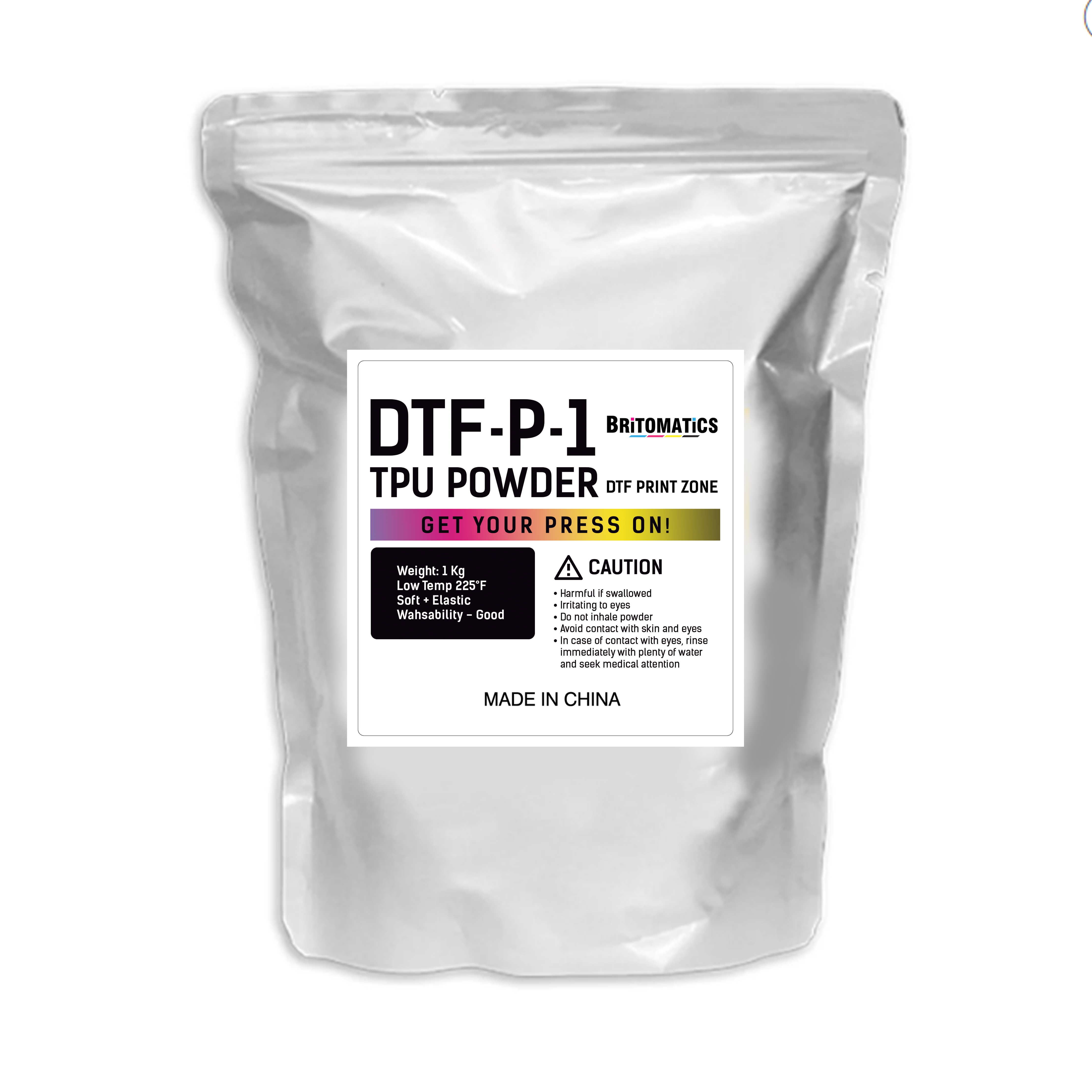
 }
}DTF TPU ADHESIVE MEDIUM 2.2 LBS
Brand: digiprint-usa.com
Tax excluded. Shipping calculated at checkout
Availability: In stock
%20is%20a%20white%20thermoplastic%20polyurethane%20(TPU)%20hot-melt%20adhesive%20powder%20for%20Direct-to-Film%20(DTF)%20printing.%20Applied%20to%20the%20wet%20white%20ink%20layer%20immediatel...
)
DTF TPU Medium Adhesive Powder (2.2 lbs / 1kg) is a white thermoplastic polyurethane (TPU) hot-melt adhesive powder for Direct-to-Film (DTF) printing. Applied to the wet white ink layer immediately after printing, this powder melts during curing and forms the adhesive bond that permanently transfers the DTF print to fabric during heat pressing. The medium particle grade (120–250µm) delivers a stronger mechanical bond than fine grade powder — making it the preferred choice for bold designs, thick fabrics, workwear, and applications where maximum adhesion is the priority. OEKO-TEX Standard 100 certified — non-toxic and safe for professional studio use. Covers approximately 100–150 A3 sheets per 2.2 lb pack. Compatible with all DTF printers, all DTF pigment inks, and both hot and cold peel PET films.
Apply powder to wet white ink immediately after printing — do not allow white ink to dry before powdering. DTF powder adheres only to the wet white ink layer. If the ink begins to dry or skin over before powdering, the powder will not bond correctly, producing transfers that peel or crack after pressing. In production environments, move from printer to powder shaker or manual powdering immediately after each sheet exits the printer. Do not batch prints for later powdering.
Product Details
| Specification | Detail |
|---|---|
| Material | Thermoplastic Polyurethane (TPU) — polyurethane resin |
| Grade | Medium — 120–250µm particle diameter |
| Colour | White |
| Pack weight | 2.2 lbs (1kg) |
| Melt point | 230–266°F (110–130°C) |
| Transfer temperature | 302–320°F (150–160°C) |
| Press time | 8–10 seconds |
| Wash resistance | 104°F (40°C): excellent / 140°F (60°C): good |
| Water resistance | Waterproof |
| Stretchability | Yes — flexible bond; does not crack on stretch fabrics |
| Certification | OEKO-TEX Standard 100 — non-toxic, environmentally safe |
| Coverage | ~100–150 A3 sheets per 2.2 lb pack |
| Shelf life | 24 months from manufacture date |
| Film compatibility | Hot peel and cold peel PET films |
| Printer compatibility | All DTF printers — i3200-A1, XP600, i1600, L1800, 4720 |
| Storage limit | Do not exceed 75°F / 24°C — keep cool, dry, away from sunlight and freezing |
Medium vs Fine DTF Powder — Which Grade Do You Need?
| Grade | Particle Size | Hand Feel | Best For |
|---|---|---|---|
| Fine | 80–170µm | Softer, smoother | Intricate designs, fine text, thin/lightweight fabrics, premium fashion apparel |
| Medium (this listing) | 120–250µm | Slightly stiffer | Bold designs, thick fabrics, workwear, maximum bond strength applications |
Why Choose Medium Grade Over Fine?
Medium grade powder (120–250µm) has larger particles than fine grade (80–170µm). Larger particles create a thicker adhesive layer between the ink and the fabric — producing a stronger mechanical bond that is better suited to heavier fabrics like fleece, denim, canvas, and performance sportswear where the fabric's textured surface requires deeper adhesive penetration. For bold graphic designs, large fills, and areas of solid colour where hand feel is less critical than bond durability, medium grade is the correct choice. Fine grade is preferable for fine text, photographic designs with gradients, and lightweight fabrics where a soft, natural feel matters most. Many production DTF operations stock both grades — fine for detailed artwork and fashion apparel, medium for bold graphics, promotional items, and workwear.
What Is DTF TPU Powder — and Why TPU Specifically?
DTF adhesive powder is the critical intermediate layer in the DTF printing process — it is what bonds the printed ink layer to the fabric fibres. Without it, DTF ink has no mechanism to adhere to fabric. The powder is applied to the wet white ink immediately after printing, then melted (cured) in an oven or heat press. During curing, the TPU particles melt and flow into the spaces between the white ink layer and the fabric, creating a mechanical and chemical bond. On pressing, the activated adhesive permanently transfers the entire ink stack to the fabric. Thermoplastic Polyurethane (TPU) is the material of choice for this application because it combines three essential properties: flexibility (the bond stretches with the fabric without cracking), durability (the bond survives repeated washing cycles), and a low melting point that activates well below the threshold where most fabric types are damaged.
OEKO-TEX Standard 100 Certification
This DTF powder is certified to OEKO-TEX Standard 100 — the internationally recognised textile safety standard that verifies every component has been tested for harmful substances and is harmless to human health. For DTF operations producing garments that come into direct skin contact — including children's clothing, sportswear, and underwear — OEKO-TEX certification confirms the adhesive powder meets the strictest safety requirements. This certification is also increasingly required by professional apparel brands and retailers as a prerequisite for supplier approval.
DTF Powder Application — Step by Step
1. Print: Print design onto DTF film — CMYK channels first, white ink layer on top.
2. Powder immediately: While white ink is still wet, apply DTF medium powder evenly over the white ink layer. In production, use an automated powder shaker. Manually, shake powder over the print and spread gently.
3. Remove excess: Tilt the film and shake off loose powder — only powder adhered to the wet white ink should remain. Excess powder left on the film produces rough edges and background texture on the finished transfer.
4. Cure: Pass the powdered print through a curing oven (250–300°F, 90–120 seconds) or use a heat press hover to melt the powder — do not press the film during curing, only hover.
5. Inspect: After curing, the powder should be fully melted and the surface should appear smooth and slightly glossy. If powder particles are still visible and unmelted, increase curing temperature or time.
6. Transfer: Press cured transfer onto fabric at 302–320°F for 8–10 seconds. Peel hot or cold depending on your film type.
Fabric Applications
• 100% cotton — T-shirts, hoodies, tote bags, denim
• 100% polyester and performance sportswear
• Cotton/poly blends and tri-blends
• Fleece, canvas, and heavy-weight fabrics — medium grade preferred for thickness
• Lycra and high-elasticity fabrics — TPU bond stretches without cracking
• Workwear and heavy-duty garments
• Dark and light coloured garments — white DTF ink layer provides opacity on dark fabrics
Storage Instructions
• Store in a cool, dry location — do not exceed 75°F (24°C)
• Keep away from direct sunlight — UV exposure degrades the TPU polymer over time
• Do not freeze — freezing causes particle clumping that blocks powder shaker nozzles
• Keep container sealed between uses — moisture absorption causes the powder to clump and lose flowability
• Shelf life: 24 months from manufacture date in sealed storage
• Avoid prolonged skin contact and inhaling powder dust — use in ventilated workspace; wear a dust mask during manual powder application
Why Buy from Digiprint USA
• Medium grade (120–250µm) — stronger bond for bold designs, thick fabrics, and maximum adhesion applications
• OEKO-TEX Standard 100 certified — safe for skin-contact garments including children's apparel
• 2.2 lbs / 1kg — covers 100–150 A3 sheets; right-sized for production shops and smaller operations
• Fine grade (80–170µm) also stocked separately for intricate designs and lightweight fabrics
• Compatible with all DTF printers (i3200-A1, XP600, i1600, L1800) and all hot and cold peel films
• In stock in Doral, Miami FL — same day shipping before 2PM EST
• We also stock DTF double matte hot peel film, cold peel film, and DTF pigment inks
• Ideal for Latin American DTF operations and custom apparel producers using Miami freight forwarders
View our full range of DTF printing supplies and consumables stocked by Digiprint USA.
Frequently Asked Questions
What is the difference between medium and fine DTF powder?
Fine powder (80–170µm) has smaller particles producing a softer hand feel — ideal for intricate designs, fine text, and lightweight fabrics. Medium powder (120–250µm, this listing) has larger particles creating a thicker, stronger adhesive layer — better for bold designs, thick fabrics, and applications where bond strength takes priority over soft hand feel. For most standard cotton T-shirt production, either grade works well — fine for premium fashion apparel, medium for bold graphics, workwear, and promotional production runs. Many shops stock both.
Why must I apply powder while the white ink is still wet?
DTF powder adheres by physically embedding into the wet white ink surface — the ink's wetness acts as the temporary adhesive that holds the powder in place before curing. If the white ink begins to dry or form a skin before powdering, the powder particles cannot embed and will brush off, leaving insufficient adhesive coverage. The result is a transfer that peels or cracks after pressing. Apply powder within seconds of the print exiting the printer.
Can I use this powder with both hot peel and cold peel DTF film?
Yes. This medium TPU powder is compatible with both hot peel and cold peel PET films. The powder's function — bonding the ink layer to the fabric — is independent of the film's peel type, which is determined by the film's release coating, not the powder. Use this powder with whichever film type suits your production workflow.
What does OEKO-TEX Standard 100 certification mean for DTF powder?
OEKO-TEX Standard 100 certification means the DTF powder has been independently tested and verified to be free from harmful substances — including formaldehyde, heavy metals, pesticides, and other toxins — at levels that could affect human health. For DTF operations producing garments for children or sensitive-skin applications, this certification provides assurance that the adhesive meets the strictest international textile safety standards.
Do you ship DTF powder to Latin America?
Yes — same day shipping from our Doral, Miami FL warehouse. Ideal for Latin American DTF operations, custom apparel producers, and sportswear decorators using freight forwarders in the Doral area.