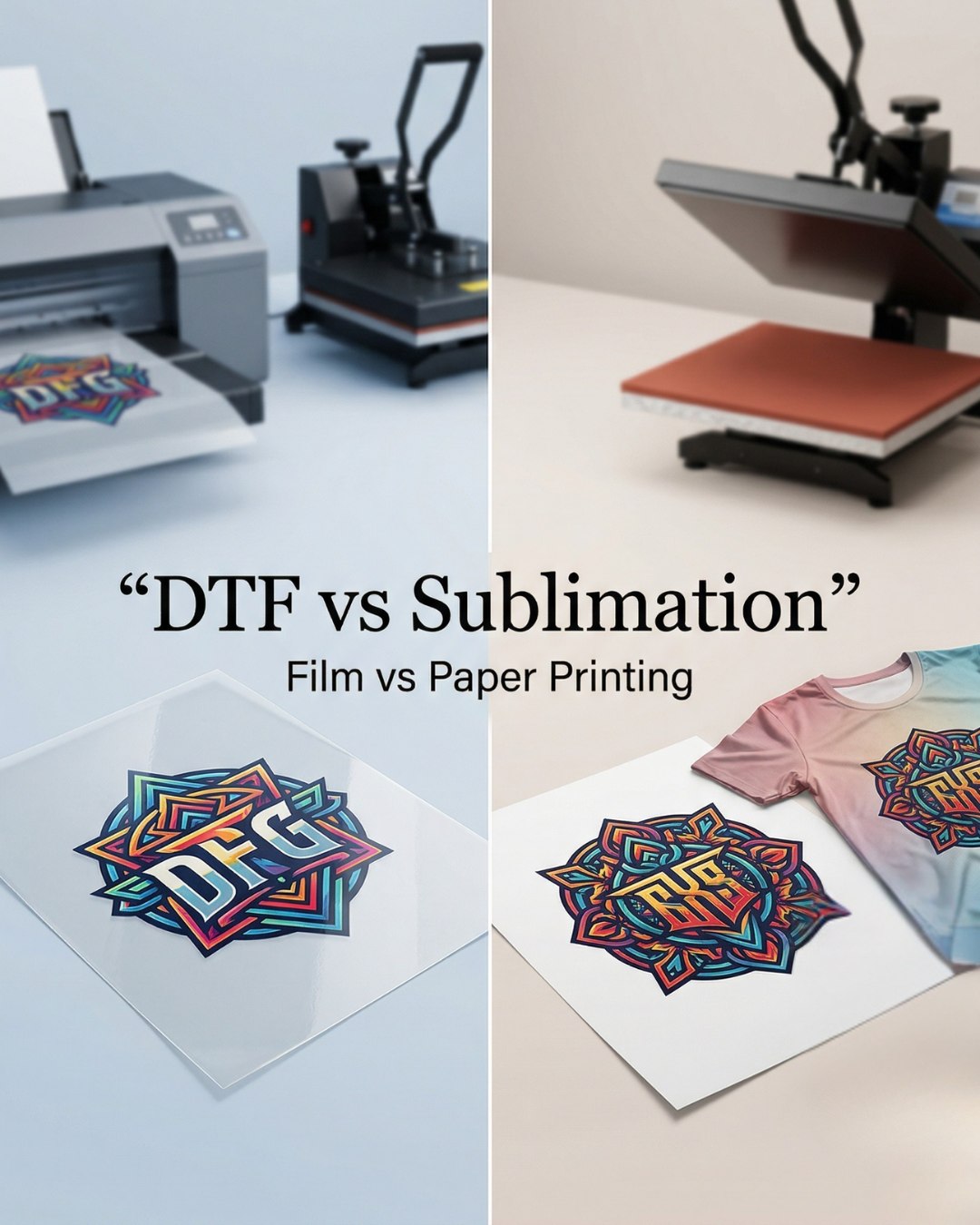
DTF and sublimation are both viable printing methods for custom apparel shops, but they suit fundamentally different business types. DTF (Direct to Film) works on virtually any fabric — cotton, polyester, blends, denim, nylon — using a pigment ink layer bonded with adhesive powder, making it the right choice for shops serving mixed garment types or printing on dark fabrics. Sublimation produces no surface layer — the dye bonds directly into polyester fibers at a molecular level, giving a softer hand feel and better breathability — but it only works on white or light-colored high-polyester fabrics (95%+ polyester recommended). DTF has higher consumable costs and requires more maintenance, particularly white ink management. Sublimation has lower consumable costs and simpler maintenance but a significantly narrower substrate range. Shops printing primarily on polyester performance wear, mugs, or hard goods should choose sublimation; shops printing on cotton apparel or mixed garment types should choose DTF.
If you're deciding between DTF and sublimation, most comparison guides won't help you much. They're written by people who sell one of these technologies, so you end up reading either "DTF is the future" from a DTF equipment vendor, or "sublimation is superior quality" from a sublimation supply company.
Both technologies have real strengths and real limitations. Which one makes sense depends almost entirely on what you're printing, what volume you're running, and what your customers care about. Here's how to think through it without the sales pitch.
How each process actually works
DTF (Direct to Film) prints your design onto a PET transfer film using water-based pigment inks, including a white ink base layer. An adhesive powder is applied while the ink is wet, then cured with heat. The finished transfer gets pressed onto the garment with a heat press. The design sits on top of the fabric as a bonded layer.
Sublimation works differently at a chemistry level. You print onto transfer paper using dye-sublimation inks, then apply heat and pressure. The heat converts the solid dye into gas, which bonds directly with polyester fibers. The ink becomes part of the fabric — there's no layer on top.
That difference in how the ink bonds to the substrate drives almost every meaningful distinction between the two.
What DTF does well
DTF works on virtually any fabric. Cotton, polyester, nylon, denim, canvas, treated leather, blends in any ratio. The adhesive powder creates a mechanical bond that doesn't depend on fiber chemistry. You can put a DTF transfer on a 100% cotton black shirt and get full color opacity.
That last part matters. Because DTF uses a white ink underbase, you print on dark garments without the design washing out. Sublimation can't do this at all — with no white ink in the process, colors on dark fabric either disappear or come out muted.
DTF is also fast for short runs. No screens to prepare, no pre-treatment required, no minimum order quantities that make economic sense. You can print a single transfer and press it.
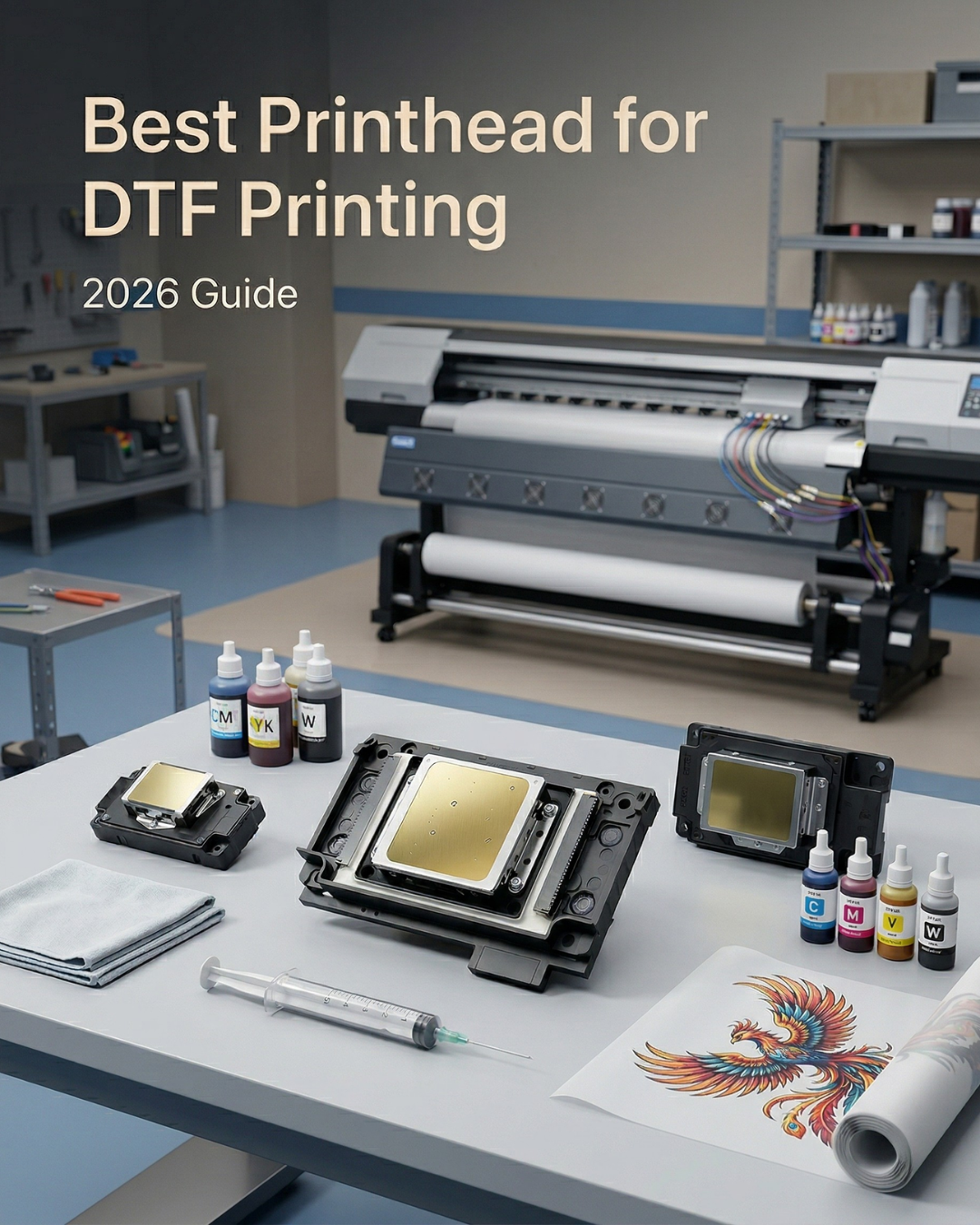
The print quality on fine details is strong. Text, gradients, and photographic images all translate cleanly because the ink sits on the film surface at full resolution before transfer. The printhead driving all of this matters too — shops running production DTF mostly end up on the Epson i3200-A1, which handles the white ink channel reliably at volume.
What DTF doesn't do well
The print is a physical layer on the fabric. On large designs, this can feel stiff or plastic-like, and it reduces the garment's breathability in that area. For athletic wear or activewear where the feel of the fabric matters to the end user, this is a real problem.
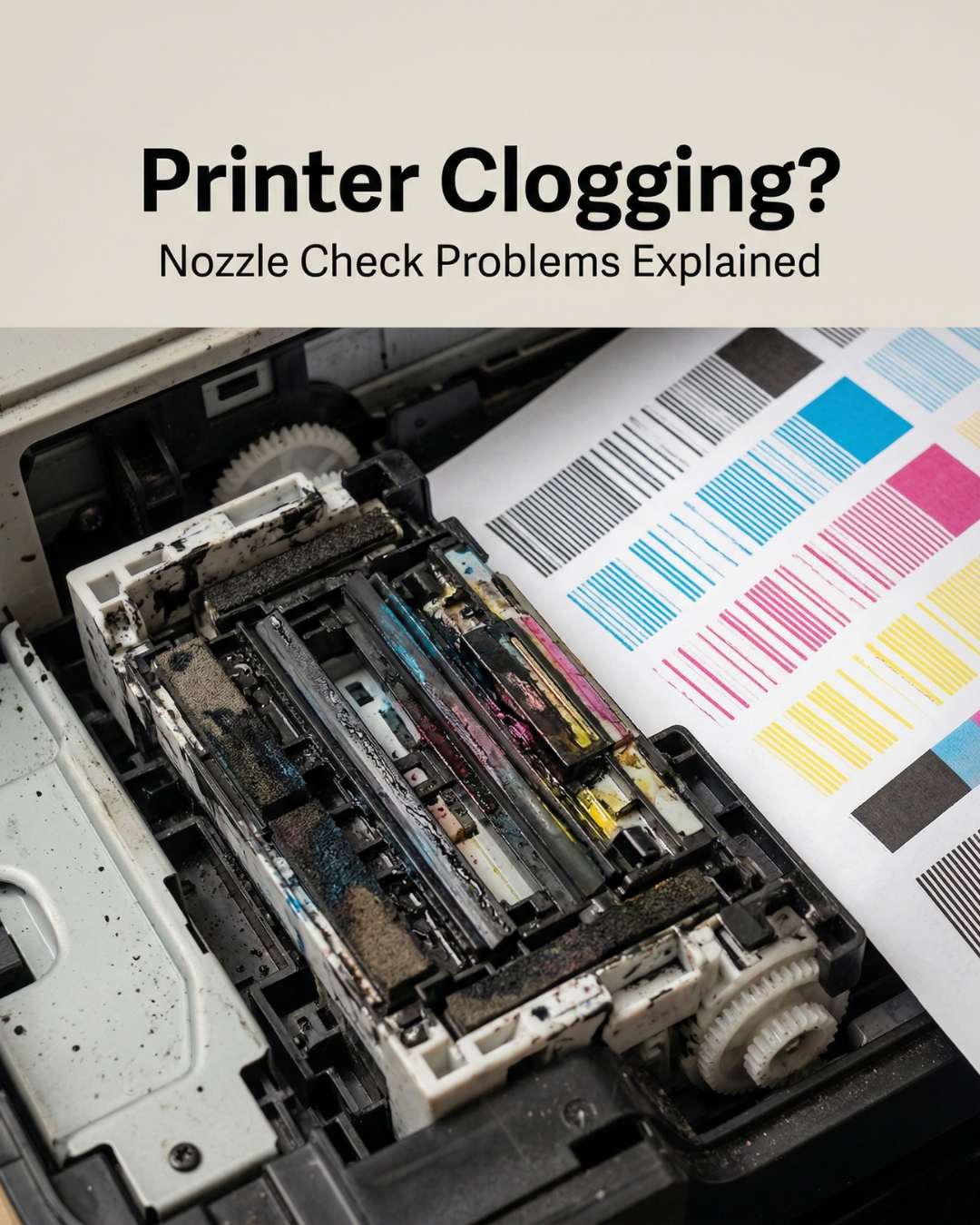
White ink is maintenance-intensive. DTF white ink has a high pigment load and settles faster than color channels. If you're not printing every day or running regular agitation cycles, white ink clogs. The maintenance routine on a DTF printer is not optional — it's a daily discipline. For a full breakdown of what actually causes recurring clogs and how to fix them, see our guide on how to clean an Epson i3200 printhead — the root causes apply across all DTF setups regardless of head model. A worn capping station is behind more DTF white ink failures than the printhead itself.
Setup costs are higher. Entry-level dedicated DTF printers start around $3,000, and a production-capable setup with a proper curing oven and heat press runs $8,000 to $15,000 or more before consumables.
What sublimation does well
The feel is unbeatable for certain applications. Because the dye becomes part of the fiber, sublimation prints have no hand feel at all — the fabric feels exactly as it did before printing. For performance apparel, sportswear, and anything where a person wears the item during physical activity, this matters.
Color vibrancy and durability are exceptional on the right substrate. Sublimation inks bond at the molecular level with polyester fibers, and because there's no surface layer to crack or peel, the print ages with the garment. Properly sublimated polyester holds color through hundreds of washes.
All-over printing is much more practical with sublimation. The process works on cut-and-sew production — you sublimate the fabric first, then cut and sew. For garments with edge-to-edge graphics, sublimation is the natural workflow.
Hard substrates are also in sublimation's lane. Mugs, phone cases, metal panels, ceramic tiles — anything with a polyester coating can be sublimated. DTF doesn't work on rigid substrates. Digiprint offers sublimation printing services for hard goods including custom sublimation beach towels if you want production handled rather than doing it in-house.
Equipment costs are lower to start. A sublimation printer and heat press for basic production runs $500 to $2,000 depending on format. Sublimation inks and transfer paper are cheaper per square foot than DTF consumables.
What sublimation doesn't do well
The fabric restriction is significant. Sublimation requires at least 65% polyester content to produce acceptable results. On cotton, the dye has nothing to bond with and the result washes out within a few cycles. On dark fabrics, the same — no white ink means no opacity on dark backgrounds.
This alone rules sublimation out for a large portion of the custom apparel market. If your customers are printing on standard cotton tees, sublimation isn't an option without switching to polyester blanks or polyester-coated products.
The process is also less flexible for small runs on individual garments. Sublimation is designed for fabric-level production, not single-item customization the way DTF is.
The side-by-side breakdown
Fabric compatibility: DTF wins. Works on anything. Sublimation is limited to high-polyester content, light-colored substrates.
Dark garment printing: DTF wins completely. Sublimation cannot print on dark fabric.
Feel on the garment: Sublimation wins for performance and activewear. DTF adds a surface layer that affects hand feel and breathability on large prints.
Hard substrate printing: Sublimation wins. DTF is fabric-only.
Startup cost: Sublimation wins. Lower equipment cost, lower consumable cost per unit.
White ink maintenance burden: Sublimation wins. There is no white ink, so there's no maintenance headache associated with it.
Short-run custom orders: DTF wins. No setup, no minimums, print one and press it.
All-over garment printing: Sublimation wins for cut-and-sew workflows. DTF is practical for defined design placements.
Which one should you choose
If your core business is custom t-shirt orders across mixed fabrics — cotton, polyester, blends, light and dark colors — DTF is the more versatile choice. It's what most custom apparel shops landing on this question are doing. If you're evaluating which DTF printhead to build around, our guide to the best DTF printheads in 2026 covers the i3200-A1 vs XP600 decision in detail.
If you're producing performance apparel, sportswear, all-over print garments, or hard goods like mugs and drinkware, sublimation is the better fit. The feel, the durability on polyester, and the hard-substrate capability are things DTF can't match.
Many production shops run both. DTF handles the cotton and dark garment orders. Sublimation handles polyester performance wear and hard goods. The equipment doesn't overlap — a sublimation printer can't run DTF, and a DTF printer doesn't sublimate — but the workflow can coexist.
The cost of consumables over time
This is where a lot of comparison guides stop too early. Purchase price is one number. Consumable cost per print is the one that matters over a year of production.
DTF consumables include DTF film, hot-melt adhesive powder, and a full ink set including white. At production volume, white ink alone is a significant ongoing expense. Film and powder add to that.
Sublimation inks and transfer paper are cheaper per square foot than DTF equivalents. If sublimation is viable for your product mix, the long-term consumable economics usually favor it.
But if sublimation doesn't fit your substrate mix, that cost advantage means nothing. Versatility has its own value.
Digiprint USA stocks supplies for both workflows — DTF film, powder, and ink sets, plus sublimation inks and printing services, shipping same day from Florida. If you're figuring out which direction to go, the question isn't which technology is better. It's which one serves your current customer base and where you want to grow. Get that right and the equipment decision follows.


Leave a comment
This site is protected by hCaptcha and the hCaptcha Privacy Policy and Terms of Service apply.