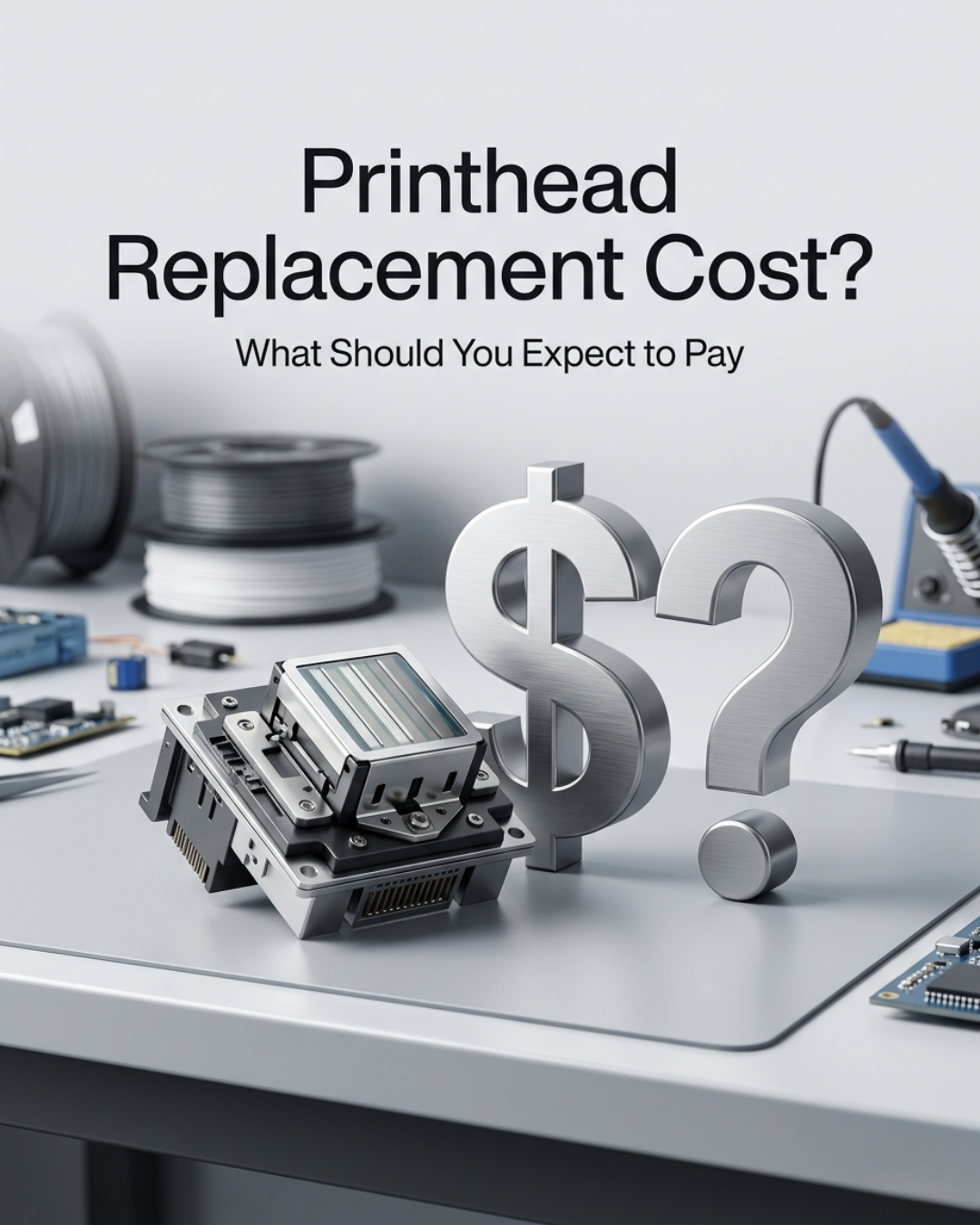
A replacement printhead for a wide format printer costs anywhere from $355 to $1,700 depending on the model. Most shops landing on this page have one of two questions: "is the price I was quoted reasonable?" or "is it cheaper to just buy a new printer?" Both are fair questions. Here are the actual numbers.
Current prices for the printheads we stock
These are shelf prices as of April 2026 — not supplier catalog list prices.
| Printhead | Common applications | Price at Digiprint |
|---|---|---|
| Epson XP600 / DX11 (F1080-A1) | DTF, UV, eco-solvent | $355 |
| Epson DX4 (6000005213) | Eco-solvent — Roland, Mimaki, Mutoh | $575 |
| Epson i3200-A1 | DTF, sublimation, water-based | $997 |
| Ricoh GEN4 MH2420 | UV industrial flatbed and roll-to-roll | $1,098 |
The XP600 is the cheapest because it's a desktop-class head used in hundreds of DTF machines. The i3200 costs more because it's a current-generation industrial head with higher print speeds and a longer service life. The Ricoh GEN4 costs the most because it's a Japanese-made industrial UV head with stainless steel construction rated for billions of nozzle actuations.
What's not included in that price
The number on the product page is the printhead itself. The full cost of a replacement on your shop floor almost always includes a few other things that catch people out.
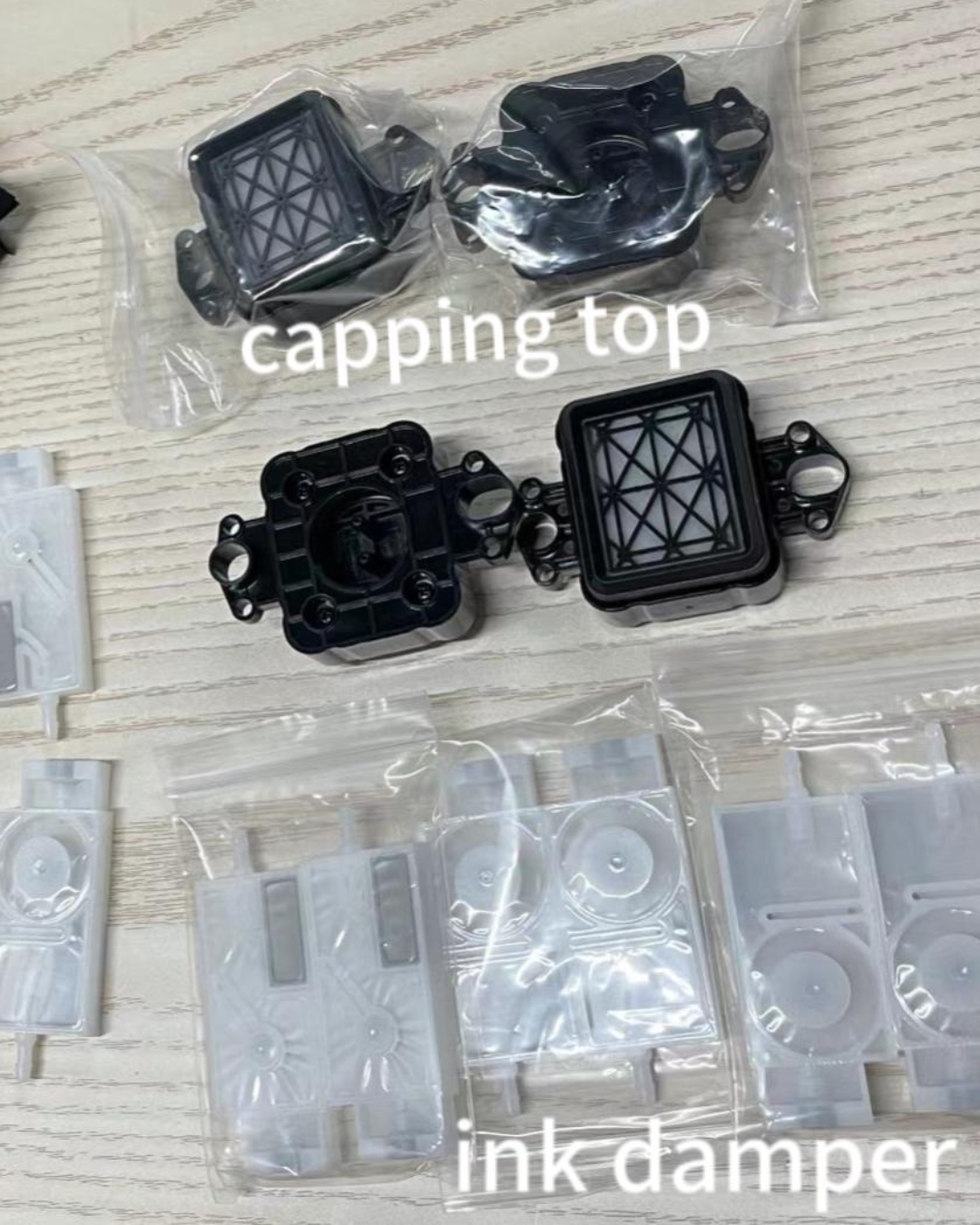
A new damper set. Anywhere from $15 to $60 depending on brand. You should never install a new head onto old dampers. If the dampers were in poor condition, they were likely contributing to the failure in the first place — and they'll do the same to the new head.
A new capping station, if yours is more than a year old or showing any cracking. $30 to $80. Same reasoning. A worn capping station is one of the most consistent causes of premature printhead failure. We cover exactly why in our guide to dampers, capping stations, and wiper blades if you want the longer version.
Cleaning solution to flush the lines before the new head goes in. Usually $20 to $40 for enough to do a proper flush.
Labor, if you're paying a tech to do the swap. Most independent techs in Florida charge $150 to $300 for a printhead install on a wide format machine — faster on a DTF printer, slower on a UV flatbed.
Downtime. If your printer is your shop's only output device and a head swap takes a full day, that's a day of production you didn't run.
Add it up and a $355 XP600 replacement turns into a $600 to $750 event fairly quickly. A $1,098 Ricoh MH2420 replacement becomes something closer to $1,500 to $1,800 all in. Worth knowing before you commit.
Repair vs replace: when does a new printer make sense?
The math here is more straightforward than people make it. Take the cost of the new printhead plus its peripherals — dampers, capping station, cleaning solution — and compare it to the depreciated value of the printer.
A four-year-old Mimaki JV33 in working condition is worth $3,000 to $5,000 used. A new DX5 head plus dampers and a capping station runs about $700. That's an obvious repair.
A 12-year-old Roland VS-540 with an electrical fault and a dead head? Now you're looking at $700 in parts plus diagnostic work plus the real probability that something else is also failing. At that point a new printer starts to make more sense.
The dividing line isn't really age — it's whether the rest of the machine still has life in it. A printer with clean carriage rails, working motors, and recent firmware is worth fixing. One that's already needed two other repairs this year probably isn't.
How to reduce the total cost
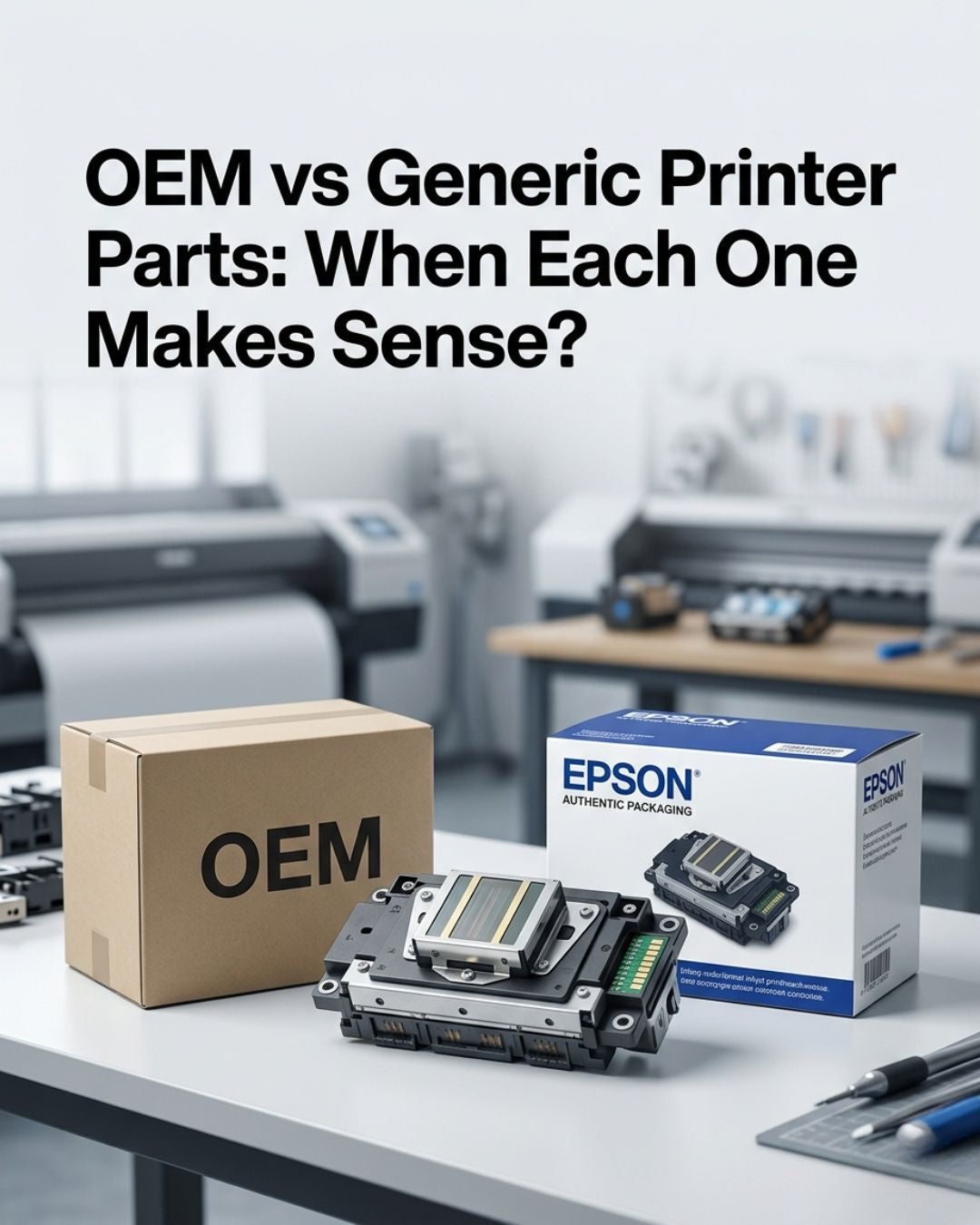
Buy genuine, not refurbished. A $150 grey-market XP600 that fails in 4 months versus a $355 genuine that lasts 18 months: the genuine costs less per month and you lose fewer production days. What gets sold as "compatible" or "OEM equivalent" on marketplace listings is almost always a head pulled from a scrapped machine, not a factory-made part. For a full breakdown of why this matters, read our post on genuine vs aftermarket printheads.
Replace the dampers and capping station at the same time. You're already opening the printer. The additional labor is zero. Skipping these to save $80 today usually means replacing another head within 12 months for the same underlying reason.
Keep one set of consumables on the shelf. A spare capping station, a spare wiper blade, a spare set of dampers. Total cost: $80 to $150. When something starts to fail, you swap it the same morning instead of waiting for overnight shipping.
Use the right cleaning guide before spending on a head. Many shops replace printheads that aren't actually dead — the head just needs a proper flush. Work through our i3200 cleaning guide first. The diagnostic steps apply to most heads, not just the i3200.
Quick answers
How much is a printhead for a DTF printer? For DTF printers using the Epson XP600 or i3200-A1 — the two most common DTF heads — genuine replacements run $355 for the XP600 and $997 for the i3200-A1 at Digiprint USA. Both ship same day from Miami.
How long does a printhead last before it needs replacing? With proper damper, capping station, and wiper maintenance, an Epson i3200 lasts 18 to 30 months in daily DTF production. A Ricoh GEN4 in UV flatbed use can run 3 to 5 years. Without that maintenance, expect 6 to 12 months on either.
Is it cheaper to repair or replace a printhead? Printheads are not field-repairable. Once nozzle rows are permanently damaged, the only fix is replacement. What people usually mean by "repair" is aggressive cleaning, which works for clogs but not for mechanical or electrical damage.
Are aftermarket printheads as good as OEM? No. Most aftermarket heads sold as new are pulled from scrapped machines. They have unknown print hours and unknown ink history. There is no aftermarket factory producing new printhead units — the technology and tooling sit entirely with a small number of manufacturers (Epson, Ricoh, Konica Minolta, Xaar). Everything else is refurbished and resold.
Browse the full range of genuine OEM printheads at Digiprint USA — in stock in Doral, Florida, shipping same day.


Leave a comment
This site is protected by hCaptcha and the hCaptcha Privacy Policy and Terms of Service apply.